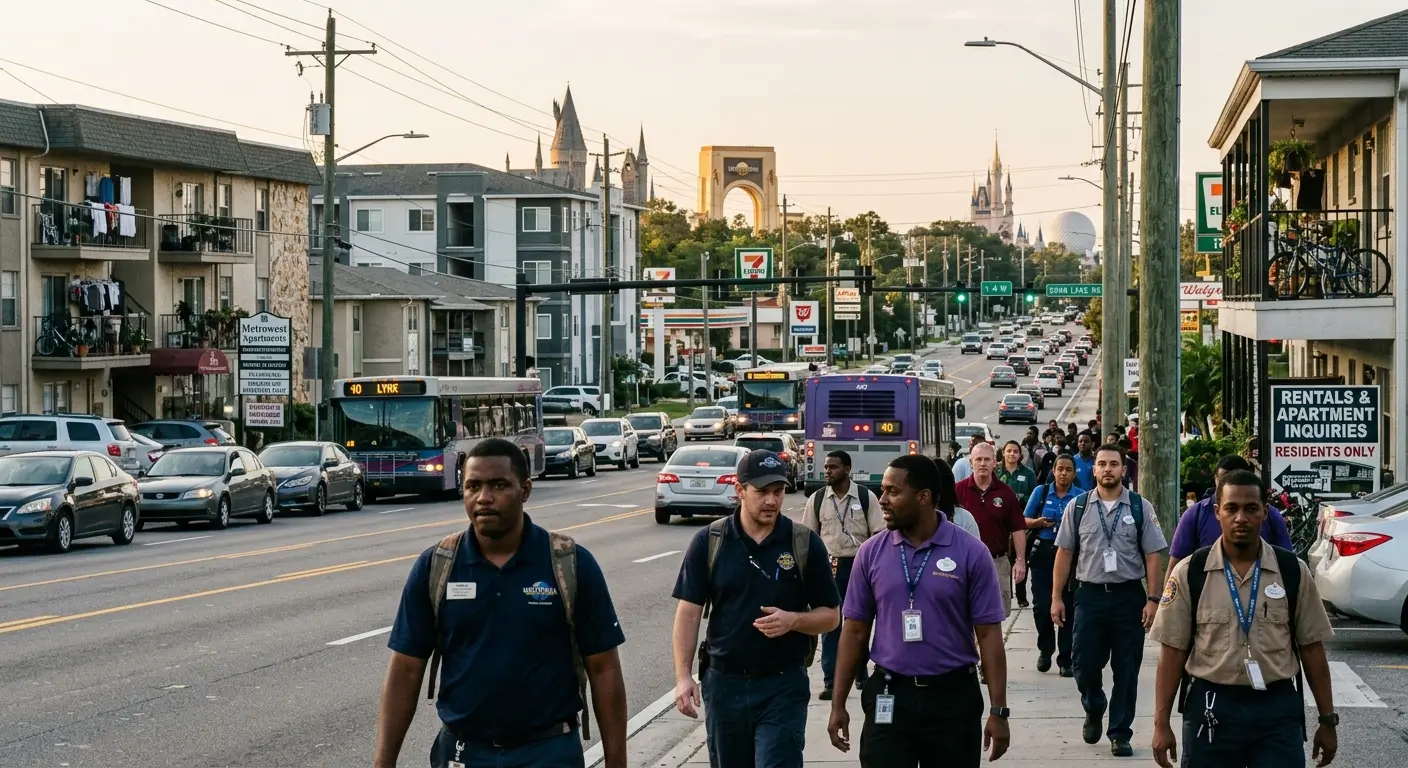
Most conversations about Orlando's rental market focus on tourism and population growth broadly, but the more specific story is about employment. Disney and Universal aren't just theme parks pulling in visitors, they're two of the largest employers in the state, and the housing choices of their combined workforce shape rental demand in very specific, identifiable pockets of the metro, in ways a citywide average rent figure can easily obscure.
Key Takeaways
Walt Disney World employs 80,000 cast members, making it the largest single-site employer in the United States, according to Disney's own reporting.
Disney recently announced plans to add more than 5,000 additional jobs in Central Florida over the next five years.
This employment base creates a demand floor for rental housing that holds up even when tourism volume fluctuates, since these are year-round residents rather than visitors.
HUD's own housing market analysis for the Orlando metro found the highest average rents concentrated in Osceola County, the area closest to the primary Disney employment corridor.
A three-year regional forecast from HUD projects demand for roughly 27,200 additional rental units across the Orlando metro, with construction activity not fully expected to keep pace.
Disney's Workforce Creates a Demand Floor Regardless of Tourism Cycles
According to Disney's own reporting on its Central Florida workforce, Walt Disney World brings together 80,000 cast members, making it Central Florida's largest employer and one of the largest single-site employers in the country. In September 2026, the company announced plans to add more than 5,000 additional Central Florida jobs over the next five years.
That scale matters for landlords because it represents housing demand tied to employment rather than tourism. A slow travel season affects hotel occupancy and short-term rental bookings, but it doesn't meaningfully change how many Disney employees need a place to live nearby, which gives rental demand in this employment corridor a stability that a purely tourism-driven submarket wouldn't have.
Where That Workforce Actually Lives
Disney's workforce spans a wide income range, from entry-level hourly roles to corporate and creative positions, and that range shows up directly in where employees choose to live. Housing options closest to the primary Disney employment area, generally along the US-192 corridor and into Osceola County, tend to serve entry-level and hourly cast members prioritizing affordability and a short commute. Higher-earning corporate, creative, and professional employees more often locate further north, in neighborhoods with different price points and amenities.
For a landlord evaluating a specific property, understanding which segment of this employment base a given location and price point is likely to attract matters more than treating "near Disney" as a single, uniform demand pool.
Universal's Growing Footprint Adds a Second Demand Center
Universal Orlando is the metro's second major theme park employer, and its footprint has grown substantially with the addition of Epic Universe. According to HUD's Comprehensive Housing Market Analysis for the Orlando metro, Universal Studios Florida alone employed roughly 26,800 people as of the report's data, a figure that predates Epic Universe's 2025 opening and additional hiring since.
Universal's employment corridor creates a second, geographically distinct demand center from Disney's, generally oriented around the International Drive area and the corridors connecting to it, which means a property's proximity to Universal versus Disney can meaningfully change which segment of theme park employees it's likely to attract.
What HUD's Own Housing Data Shows
HUD's analysis of the Orlando metro's rental market found that Osceola County, the area closest to Disney's primary employment corridor, carried the highest average rent of any submarket studied, at $2,218 as of the report's most recent data, compared to a broader metro average of $1,786. That premium reflects concentrated demand from a large, stable employment base competing for a more limited supply of rental housing in that specific area.
HUD's three-year forecast for the region projects demand for roughly 27,200 additional rental units, with construction activity not fully expected to close that gap on its own, which suggests continued upward pressure on rents in the submarkets closest to these two employment anchors. Our marketing team tracks these submarket-level trends specifically because a citywide average rent figure often obscures what's actually happening in the pockets of the metro closest to major employers.
What This Means for Positioning a Rental Property
For an owner evaluating where to invest or how to position an existing property, understanding which employment corridor a rental sits closest to, and which income tier of that workforce it's realistically priced for, changes both marketing strategy and pricing expectations. A property near the US-192 corridor competing for Disney's hourly and entry-level workforce should be marketed and priced differently than one further north competing for corporate or creative employees, even if both properties are technically "near Disney."
FAQ
How many people does Disney World actually employ?
According to Disney's own reporting, Walt Disney World employs 80,000 cast members, making it Central Florida's largest employer and one of the largest single-site employers in the country.
Does Universal Orlando's workforce affect the same neighborhoods as Disney's?
Not entirely. Universal's employment corridor is generally centered around the International Drive area, creating a geographically distinct demand center from Disney's US-192 and Osceola County corridor.
Why does Osceola County have the highest rents in the Orlando metro?
According to HUD's own housing market analysis, Osceola County's proximity to Disney's primary employment corridor creates concentrated rental demand against a comparatively limited supply, pushing average rents above the broader metro figure.
Is Orlando's theme park employment base growing or shrinking?
Growing. Disney announced plans in 2026 to add more than 5,000 jobs over five years, and Universal's workforce expanded substantially with the 2025 opening of Epic Universe.
Positioning Your Property Within This Employment Base
Orlando's rental demand isn't just a function of tourism or general population growth, it's shaped in specific, identifiable ways by two of the largest employers in the state. Understanding which employment corridor a property sits closest to, and which income tier of that workforce it realistically serves, gives an owner a much more precise read on demand than a citywide market average ever could.
If you'd like a closer look at how your specific property fits into this picture, our property management team can walk through the submarket data with you directly.